Estimating oceanographic connectivity using lagrangian biophysical modeling
What is oceanographic connectivity?
Oceanographic connectivity is a fundamental process in marine ecology, describing how ocean currents shape the distribution of biodiversity. It is the process by which currents mediate the exchange of individuals and genetic material between different marine populations. This process has a dual effect: it can create barriers that isolate populations, leading to genetic differentiation, or it can facilitate long-distance dispersal, which is crucial for species' range expansion and resilience.
To measure and predict these complex patterns, our research team uses biophysical modeling. This approach integrates high-resolution oceanographic data, such as daily current velocities, with key biological traits of marine species. These traits include the seasonality of reproduction and the duration of their planktonic (drifting) life stages. By combining the 'bio' (biology) with the 'physical' (ocean currents), we can accurately predict dispersal pathways and quantify the connections between coastal ecosystems.
Ocean current connectivity
Global estimates of ocean current connectivity, a benchmark for marine conservation and climate change resilience, tracking 204 million particles over 21 years.
Explore the dataset Download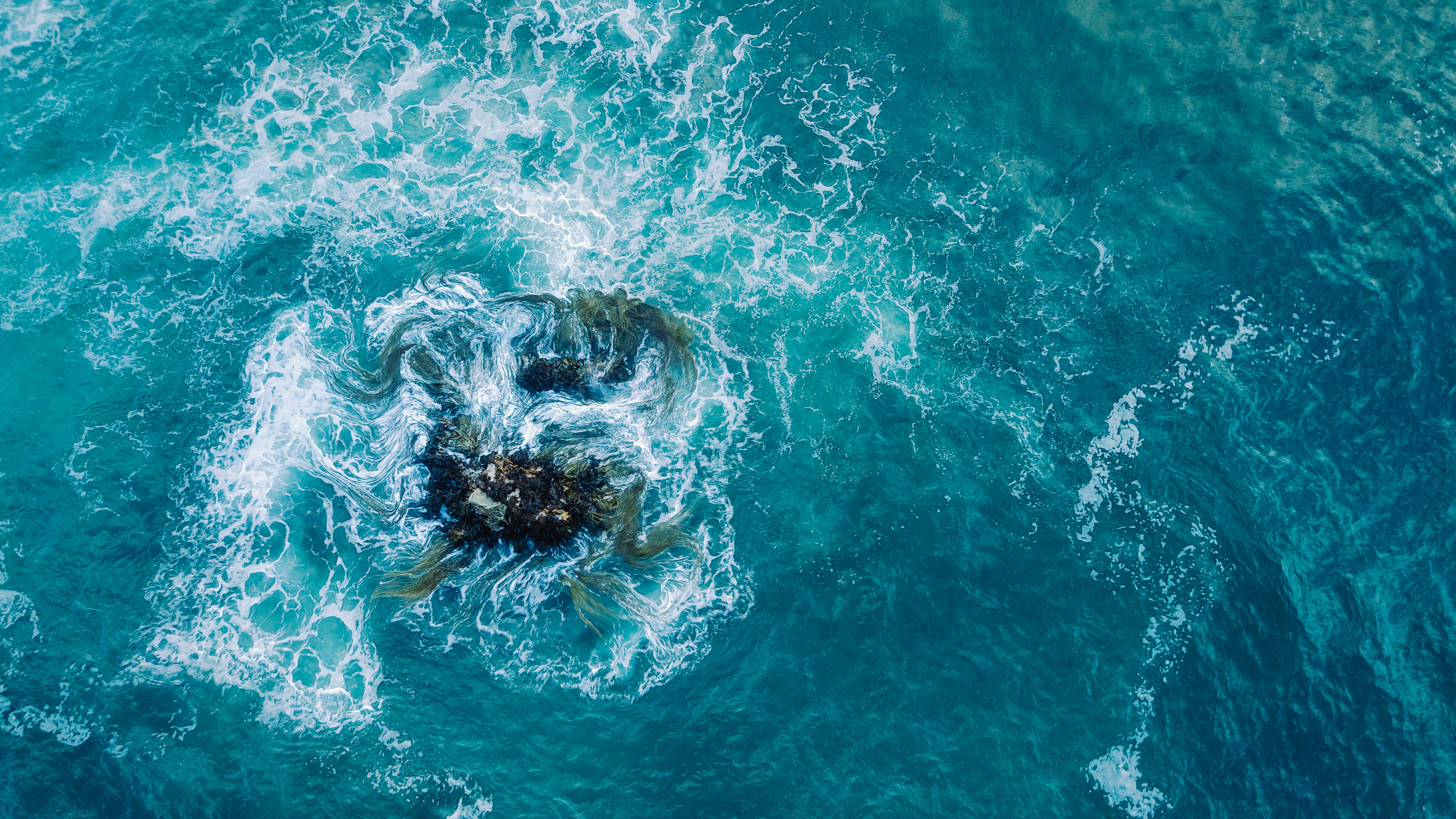
Our modeling approach
Our methodology is built on a framework that simulates how passive particles—representing larvae or propagules—are transported by ocean currents. This approach involves several key steps:
1. Ocean Current Data: We use a high-resolution, global reanalysis of ocean physics (specifically, GLORYS12V1). This provides us with daily ocean current velocity data over a 21-year period (2000-2020).
2. Spatial Grid: We define a virtual environment using a global grid of adjacent, equal-area hexagons (with 9.85 km sides). The hexagons that intersect the coastline serve as the "source" and "sink" sites for our simulations.
3. Lagrangian Particle Simulation: We use a biophysical model to run Lagrangian simulations. This means we release virtual "passive particles" daily from the center of every coastal site.
4. Tracking and Recording: We track the position of each particle hourly as it's advected (moved) by the surface currents. Particles are allowed to drift for a maximum of 180 days, a period that covers the planktonic duration of most marine species. When a particle lands in a different coastal site (a 'sink'), we record this as a "connectivity event," noting the source, sink, and travel time.
5. Network Analysis: We analyze the millions of recorded connectivity events using graph theory. In this framework, the coastal sites are the 'nodes' and the dispersal pathways are the 'edges'. This allows us to calculate key metrics, including:
5.1 Probability of Connectivity: The likelihood of a particle successfully traveling from site i to site j (forward probability) or the likelihood of a site i receiving particles from site j (backward probability).
5.2 Travel Time: The average time (in days) it takes for particles to travel between two sites.
5.3 Stepping-Stone Connectivity: We also use algorithms (like Dijkstra's ) to identify multi-generational pathways. This estimates connectivity between remote sites that cannot be reached in a single dispersal event but can be linked through a series of "stepping stones"
Main applications in Marine Ecology
1.This biophysical modeling approach provides a new benchmark for research and has critical applications for understanding and managing marine ecosystems:
2. Informing Conservation Strategies: Our connectivity estimates are essential for developing effective conservation plans. For example, they can help design networks of Marine Protected Areas (MPAs) that are biologically connected, ensuring that protected populations can replenish one another.
3. Understanding Biodiversity Patterns: The model helps explain the vast genetic structuring observed in marine species. It allows us to see how oceanographic barriers foster the differentiation of biodiversity or how interconnected "metapopulations" are formed.
4. Assessing Climate Change Resilience: Connectivity is vital for the persistence of marine species in the face of climate change. Our models can identify pathways for recolonization after disturbances and map out how genetic diversity might be maintained, which boosts adaptive potential.
5. Predicting Species Expansion: By modeling long-distance dispersal events, we can better understand how species, including invasive ones, may expand their range.
6. Species-Specific Insights: The dataset allows us to filter connectivity events by specific planktonic durations (e.g., 30 days for one species, 90 for another) and by specific seasons (e.g., a species' spawning period). This flexibility provides highly tailored insights into the dispersal ecology of individual species.
biodiversityDS.
Centre of Marine SciencesFaro, Portugal